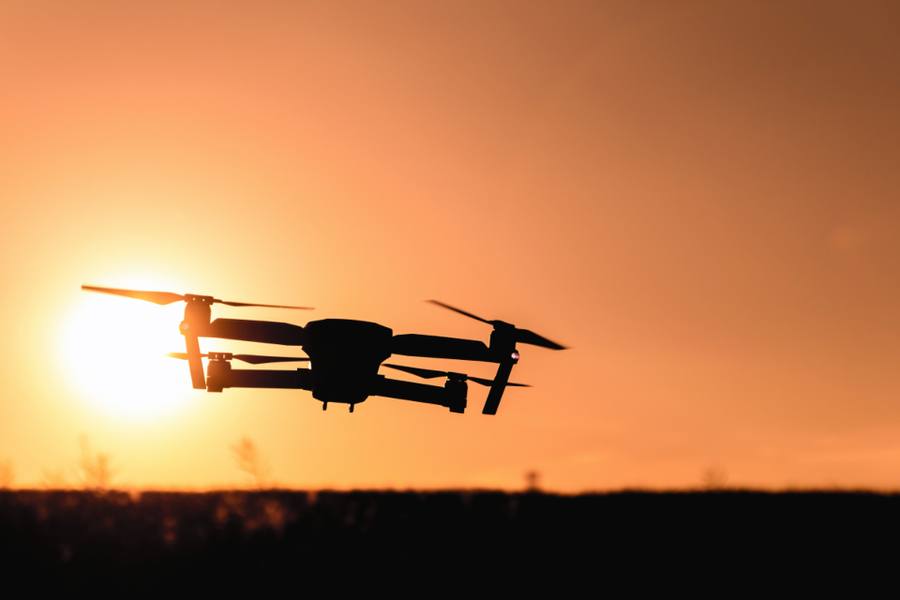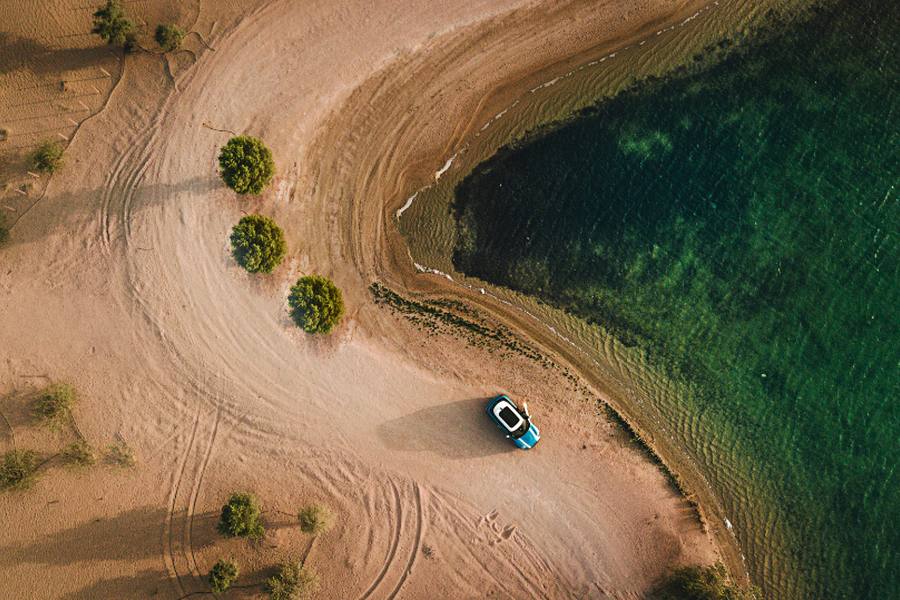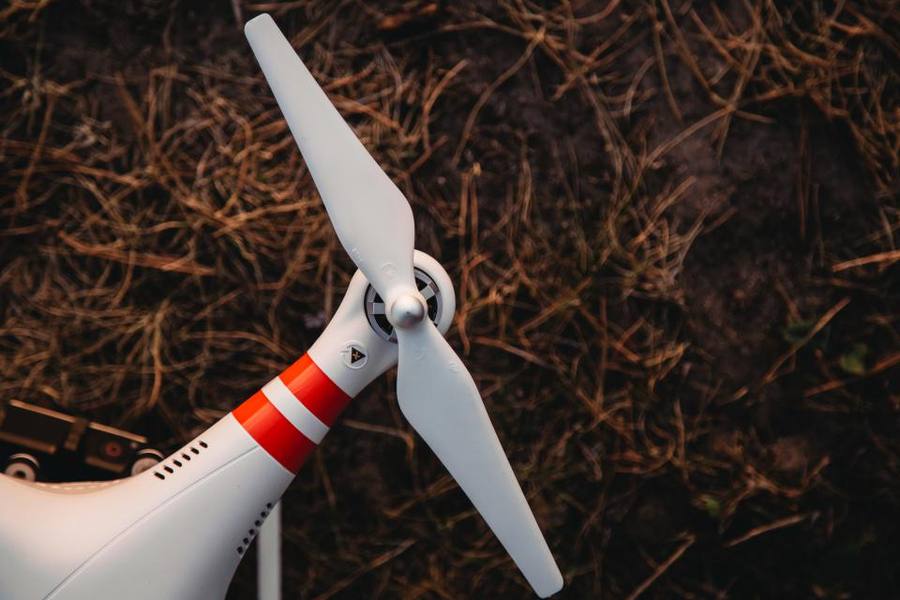
Image illustrative (photo de stock) ; ce n'est pas le produit exact.
Takeoff Is When Damage Happens
Propellers at full speed close to the ground throw up dust, sand, grit and grass clippings, which get into motors, scratch camera lenses and lodge in gimbals.
That happens on every takeoff and landing from an unprepared surface, and the damage is cumulative rather than immediate, which is why people do not connect the two.
A landing pad provides a clean surface that generates no debris, which eliminates the problem entirely for the cost of a piece of fabric.
Sand And Water Are The Worst Cases
Beaches are the most damaging environment for a drone. Sand gets into everything, is abrasive, and is essentially impossible to remove from a gimbal mechanism.
Salt spray compounds it by corroding contacts and motors, and a drone flown regularly at the coast without care has a considerably shortened life.
A pad addresses the takeoff and landing part, and rinsing nothing and keeping the drone bagged between flights matter as much in that environment.
Visibility For Return
A brightly coloured pad is visible from altitude, which makes returning to the launch point by sight considerably easier than searching for a patch of grass.
Most drones return automatically to their recorded takeoff point, and that is accurate to a few metres rather than exactly, so a visible pad helps the final approach.
Two-sided pads with different colours let you choose whichever contrasts with the terrain, which sounds trivial and genuinely helps over a field or a beach.
Securing It Against Downwash
Propeller downwash is strong enough to lift an unsecured pad, and a pad folding up into the propellers during takeoff is worse than no pad at all.
Pegs or weights are supplied with better pads and should be used every time on any surface that accepts them.
On hard surfaces where pegs cannot be used, weighting the corners with bags or stones is necessary rather than optional, particularly with larger drones.
Size And Portability
The pad should be comfortably larger than the drone with propellers extended, since landings are rarely perfectly centred.
Larger pads are heavier and bulkier to carry, and most fold into a supplied bag that packs reasonably flat.
For a sub-250 gram drone a small pad is adequate; for a larger drone with stronger downwash, a bigger and more securely pegged pad is needed.
Compass interference is a separate reason to think about where you launch from, because taking off close to steel reinforcement, metal railings, vehicles or buried services can disturb the magnetic compass and produce erratic flight or a failed calibration. A pad does nothing about that, and moving several metres away from metal structures before powering up does. It is one of the more common causes of a drone behaving strangely immediately after takeoff.
The Verdict
A cheap accessory preventing the cumulative debris damage that shortens drone life, while making the return approach visibly easier.
It must be secured against downwash or it becomes a hazard, and on sand it addresses only part of a broader problem.
Peg it down every time. A pad lifting into the propellers during takeoff is considerably worse than not using one at all.
En un coup d'œil
Avantages
- Prevents debris entering motors, gimbal and lens
- Bright colour makes the return approach easier
- Two-sided versions contrast with any terrain
- Folds flat and weighs very little
Inconvénients
- Must be pegged or weighted or it lifts into the propellers
- On sand it solves only part of the problem
- Larger pads are bulkier to carry
- Pegs cannot be used on hard surfaces
Questions fréquemment posées
Does it really matter?
Yes. Propellers at full speed near the ground throw dust, grit and clippings into motors, scratch the lens and lodge in the gimbal. The damage is cumulative rather than immediate, which is why people do not connect it to takeoffs.
Do I have to peg it down?
Every time. Downwash lifts an unsecured pad, and a pad folding into the propellers during takeoff is considerably worse than not using one. On hard surfaces where pegs will not go, weight the corners with bags or stones.
Is it enough on a beach?
It handles takeoff and landing, and sand and salt spray affect a drone throughout a flight. Keeping the drone bagged between flights and away from spray matters as much as the pad in that environment.
Spécifications
| Type | Folding drone landing pad |
| Prevents | Debris ingestion on takeoff and landing |
| Securing | Pegs or weights, every time |
| Visibility | Bright colour; two-sided versions |
| Size | Comfortably larger than propeller span |
| Worst environment | Beaches; sand and salt |
| Packing | Folds flat into a bag |
| Larger drones | Need bigger pad and firmer securing |
Résumé
Prevents the cumulative debris damage that shortens drone life, cheaply. Peg it down every time or it becomes the hazard.
Vérifier le prix sur Amazon